
Article: When Sculpture Becomes Architecture
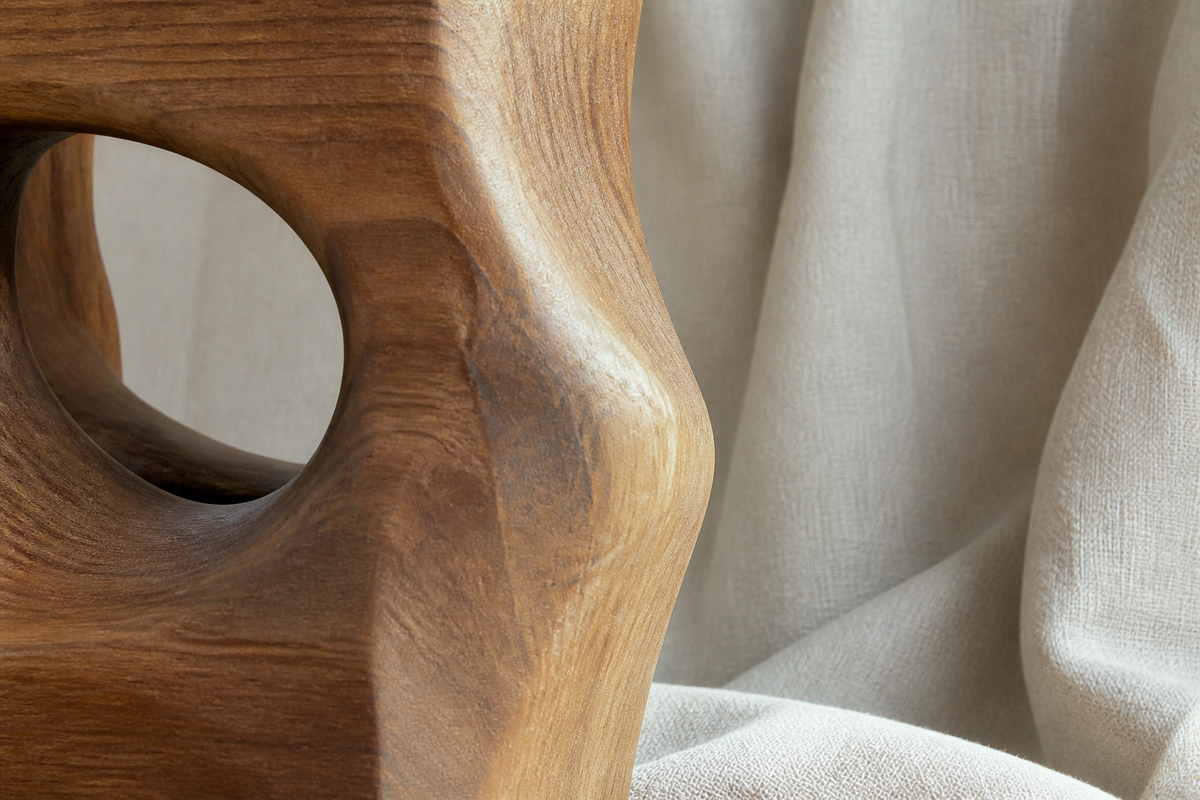
When Sculpture Becomes Architecture
A large sculpture does more than occupy a corner. It can slow a sightline, mark a threshold and give an interior a distinct center of gravity.
An object can organize a room
Furniture usually answers function: where to sit, work, eat or store. Sculpture answers a different need. It gives the eye a place to pause and creates a relationship between otherwise separate architectural surfaces. A tall work near a doorway can make the transition feel deliberate. A low horizontal form can extend the line of a console or hearth. A pierced monolith can frame a fragment of the room beyond it.
This is what it means for sculpture to behave architecturally. The work does not imitate a building. It participates in sequence, scale, light and movement—the same forces that make a room legible.
Work with the threshold
Thresholds are powerful positions because the sculpture can be seen both as a destination and as a frame. Place a strong vertical form where it is visible through an opening, but keep enough distance that the silhouette does not merge with the door jamb. The gap around the work is part of the composition.
An off-axis placement is often more interesting than strict centering. It allows the viewer to discover different profiles while moving through the opening and keeps the work from reading like a sign or decorative trophy. Confirm circulation and access first; drama should not be purchased at the cost of daily movement.
Create a conversation with furniture
A monumental sculpture does not need a matching set of heavy furniture. Contrast can make the work clearer. A dark carved teak form may sit well with pale mineral walls, a low upholstered chair and one deep blue-gray or muted olive textile. The furniture establishes human scale; the sculpture provides the vertical or volumetric counterpoint.
Keep the nearest furniture low enough that the principal silhouette remains visible. Avoid surrounding the work with many small accessories, which reduce its authority and make the area feel styled rather than resolved. One substantial chair, bench or table usually provides a stronger relationship than a collection of decorative objects.
Let light reveal, not theatricalize
Natural side light is especially effective on carved wood because it makes shallow changes of plane visible. A single window or deep reveal can be enough. The goal is readable volume and grain, not a spotlighted stage. Preserve information in dark clefts and apertures; if every recess collapses to black, the geometry becomes harder to understand.
At night, use broad ambient light with a controlled directional source from one side. Test the view from the room’s normal seating positions. The work should remain present without turning the surrounding space into a gallery set.
Use repetition carefully
A pair or series can create rhythm along a wall, corridor or long room, but repetition magnifies inconsistency. Maintain a clear rule for spacing, height and orientation. Paired objects can face, echo or counterbalance one another; they should not look like accidental duplicates.
For a single work, repetition can come from architecture instead: the vertical rhythm of window mullions, the grain direction of timber joinery or the measured joints of a stone floor. These quiet alignments help the sculpture belong without matching it literally.
The strongest placement feels inevitable
A successful installation does not rely on novelty. From the first sightline, the work appears to have enough room, the right visual weight and a meaningful relationship to the architecture. From close range, material and carved detail reward attention. From the side and rear, the form remains coherent.
Consider the work from the front, side and rear when planning its position. Each view should contribute to the room, with enough space for the silhouette, carved surfaces and surrounding architecture to remain clear.

