
Article: How to Choose the Right Scale for a Wood Sculpture
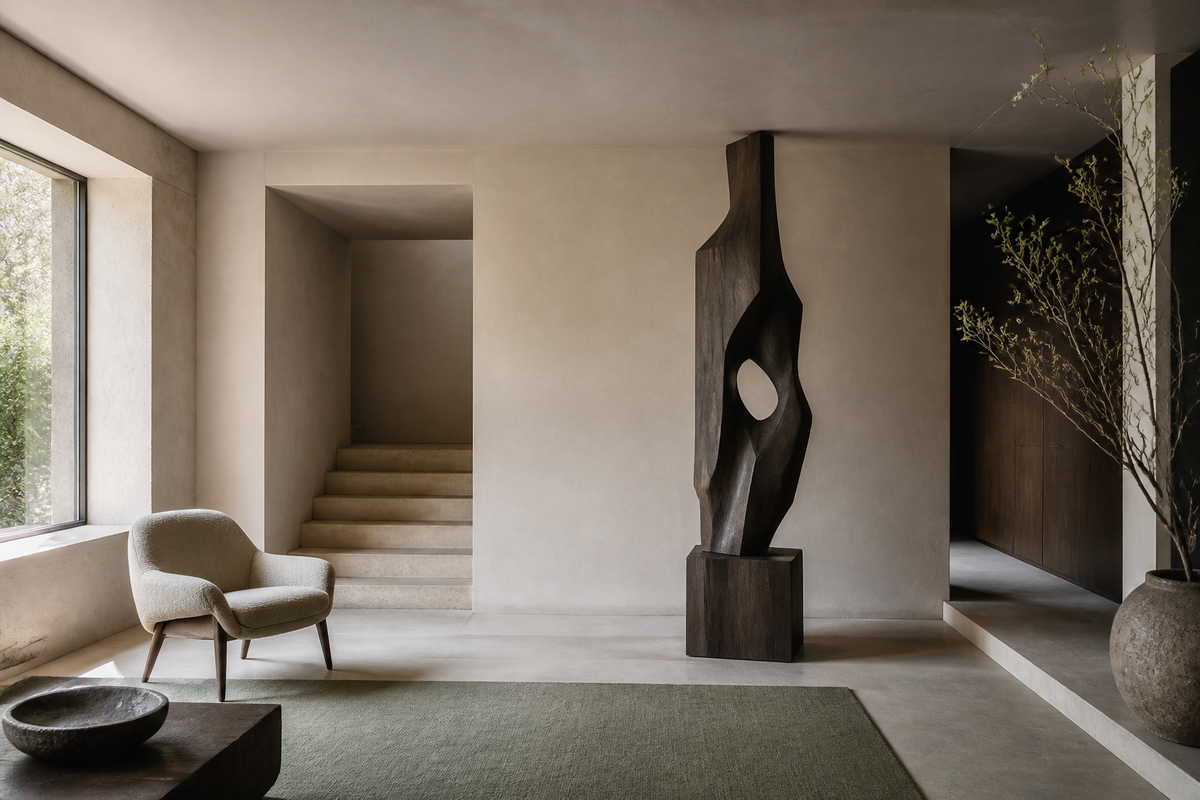
How to Choose the Right Scale for a Wood Sculpture
Scale is not simply a measurement. It is the relationship between an object, the architecture around it and the way a person moves through the room.
Start with the room, not the object
The most useful first question is not “Which size do I like?” It is “What job should the sculpture perform in this room?” A tabletop object can reward close inspection. A pedestal work can punctuate a quiet corner. A floor sculpture can organize an entry or hold its own against a tall wall. The same silhouette may be available at several scales, but it will not create the same spatial effect at each size.
Begin by naming the role. Should the work be discovered gradually, or should it register from the threshold? Is it meant to complete a furniture grouping, mark a transition between rooms, or stand as the principal art in the space? Once the role is clear, dimensions become a design decision rather than a guess.
Use three measurements that photographs cannot replace
Record the clear wall or floor width, the available height and the deepest dimension that will not interfere with movement. Depth is often overlooked. A piece that looks slender from the front can project farther into a passage than expected, while a broad work may feel calm if it sits within a deep window reveal or generous landing.
Then measure the primary viewing distance. A highly faceted work needs enough room for the eye to read its silhouette and changing planes. As a practical review, stand at the entry point from which the work will first be seen, then at the place where someone will spend time with it. Both views matter.
Protect circulation around a floor sculpture
Negative space is part of the work. Avoid sizing a sculpture so tightly that it appears stored rather than placed. Leave a deliberate buffer around the widest point, and consider bags, coats, doors, cleaning paths and the natural arc of a person turning through the room. In a narrow route, a smaller work with a strong vertical silhouette can have more authority than a wider piece that compromises movement.
For a monumental work, access is also part of scale. Door dimensions, elevator capacity, stair turns and the final route into position should be reviewed before production or dispatch. This is why CARVED FORM treats destination and access as part of the approved specification rather than an afterthought.
Read visual weight, not only inches
Two sculptures of identical height can feel entirely different. A pierced form allows architecture and light to pass through it, so it may tolerate a larger overall envelope. A dense monolith with a dark finish carries more visual mass and can feel larger than its measurements. A broad base creates stability; a narrow foot and lifted void can feel lighter.
Finish changes perception as well. Ebonized or smoked teak tends to read as a strong graphic presence, especially against pale plaster. Natural teak may integrate more softly with daylight and stone. The goal is not to match every wood tone in the room. It is to create a considered relationship between the work and its background.
A room-by-room way to decide
In an entry, prioritize the first sightline and comfortable passage. In a living room, check the relationship to the sofa back, major artwork and ceiling height. On a console, keep enough surrounding surface visible for the object to feel intentional, and confirm that its depth does not dominate the furniture. In a double-height space, judge the sculpture from both near and distant viewpoints; a work that feels generous at eye level may still disappear against the full volume.
A simple full-size paper outline or painter’s-tape footprint is more reliable than imagination alone. Live with the outline for a day. Approach it from each doorway. Sit down. Turn on evening lighting. The right size usually reveals itself through movement rather than a single front-facing view.
What CARVED FORM recommends before an order
Confirm the selected S, M or L dimensions against the room, identify the intended position, and share any access constraints for larger work. If the standard scales do not resolve the space, contact CARVED FORM to discuss a custom size for your space.
The best scale is the one that gives the sculpture authority without asking the room to surrender its function. It should feel inevitable in place: large enough to shape the atmosphere, precise enough to leave architecture and daily life intact.

